


The Poison Tree Tattoo Meaning goes deeper than dark branches and poisonous fruit. It represents hidden anger, betrayal, resentment, and emotions that grow when left unspoken. Inspired by William Blake’s famous poem A Poison Tree, this tattoo carries powerful messages about human behavior and emotional struggles. However, its meaning isn’t always negative. Many people choose this design to represent personal growth, emotional healing, and lessons learned through painful experiences.
From twisted branches to a bright red apple, every detail can tell a different story. Whether you love gothic artwork or meaningful body art, understanding its symbolism can help you choose a design that reflects your personality and life experiences.
Quick Answer: What Does a Poison Tree Tattoo Mean?
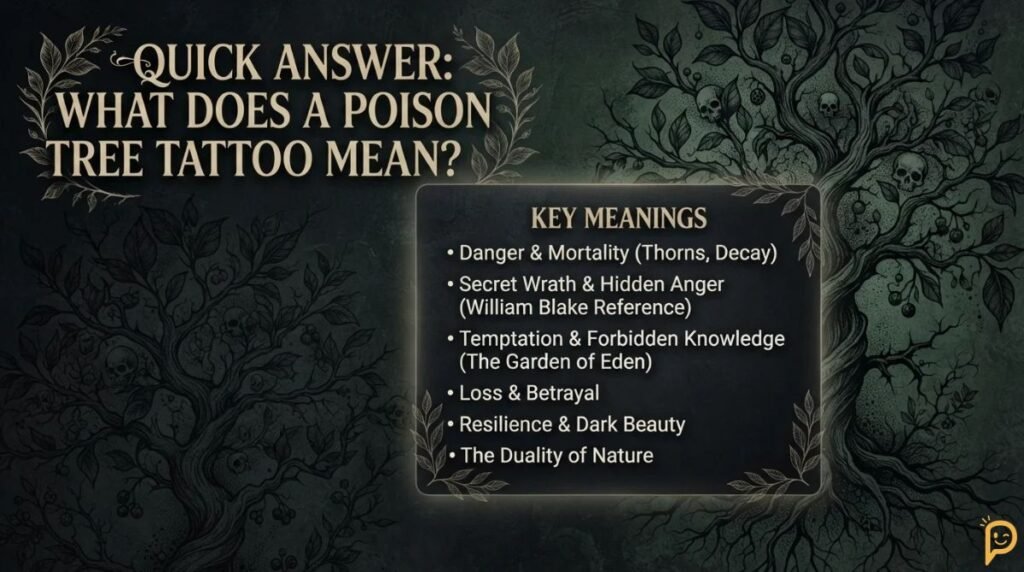
A poison tree tattoo usually symbolizes hidden anger, resentment, betrayal, revenge, and emotions that become harmful when left unexpressed. Its poisonous fruit represents the consequences of negative feelings that grow over time. Many designs also connect with William Blake’s poem A Poison Tree, which explores the dangers of hiding anger. The exact meaning depends on the symbols, artwork, and personal story behind the tattoo.
However, this design can carry a more hopeful message. A tree with fresh leaves growing among dead branches may represent recovery, resilience, and emotional transformation. Someone might choose it to remember a difficult relationship or a painful chapter. Another person may simply appreciate its dark appearance and literary symbolism. Ultimately, the meaning of a poison tree tattoo comes from the message you want to carry.
Where Does the Poison Tree Tattoo Meaning Come From?

The story behind this tattoo begins with William Blake, an English poet and artist known for his imaginative writing and symbolic artwork. His famous poem A Poison Tree appeared in Songs of Experience, published in 1794. This collection belongs to the tradition of Romantic poetry and explores human feelings, innocence, experience, and moral struggles. Blake uses a growing tree as a powerful metaphor for anger that remains hidden instead of being honestly expressed. This literary connection explains why the William Blake poison tree tattoo has become an interesting choice for readers and tattoo enthusiasts. The design turns an abstract emotional struggle into something people can see and understand.
William Blake and His Poem “A Poison Tree”
A Poison Tree is one of William Blake’s best-known poems about anger and its consequences. It describes two different reactions to conflict. The speaker openly addresses anger toward a friend, and that anger eventually disappears. However, the speaker hides anger toward an enemy. Instead of discussing the problem, he allows resentment to grow through fear, deception, and emotional dishonesty. The poem belongs to Songs of Experience, where Blake explores the darker sides of human behavior. Its simple language carries a much deeper message about how unresolved feelings can develop into destructive actions. That’s why the poem remains central to tattoo symbolism in literature.
What Happens in the Poem?
The poem follows the growth of a symbolic tree. The speaker compares his anger to something he waters with fears and tears. He also uses smiles and deceptive behavior to hide his real feelings. As time passes, the tree produces a bright, attractive fruit. However, that fruit carries danger beneath its appealing appearance. The enemy eventually encounters the fruit and suffers the consequences. Blake’s imagery shows how hidden hostility can develop into something destructive. A poison tree tattoo often borrows this idea through deep roots, twisted branches, and poisonous fruit.
How the Poem Connects to Tattoo Symbolism
A tattoo based on Blake’s poem transforms its message into permanent visual art. The tree represents anger that grows when someone refuses to confront it. Its roots can symbolize old memories and unresolved problems. Its branches show how those feelings spread into other parts of life. Meanwhile, the poisonous fruit represents the harmful results of bitterness and revenge. A Blake-inspired tattoo might include a red apple to make this connection easier to recognize. Other designs use dark branches and broken roots to express the same emotional struggle without copying the poem directly.
Is Every Poison Tree Tattoo Inspired by William Blake?
Not every poison tree tattoo comes from Blake’s writing. Some people choose poisonous trees because they enjoy gothic artwork, unusual botanical designs, or dark fantasy imagery. Others connect the tree with personal experiences rather than literature. For example, someone might see a damaged tree as a reminder of surviving a difficult relationship. Another person may use poisonous fruit to represent temptation or dangerous choices. These independent interpretations are just as personal as literary ones. The meaning of a poison tree tattoo doesn’t follow one fixed rule.
Core Poison Tree Tattoo Symbolism and Meanings

At its heart, poison tree imagery explores the relationship between emotions and consequences. A beautiful tree can hide poisonous fruit just as a person can hide anger behind a friendly expression. This contrast gives the design its unusual power. Its poison tree tattoo symbolism often includes painful experiences, unhealthy emotions, and the lessons people learn afterward. Depending on the artwork, it may communicate a warning, a memory, or a fresh start. The following meanings explain why different people connect with this unusual tattoo.
Suppressed Anger and Hidden Emotions
Anger doesn’t always disappear when someone stays quiet. Sometimes, it grows beneath the surface and affects how that person thinks and behaves. This is the central idea behind suppressed anger symbolism in poison tree tattoos. The branches may represent feelings that spread when someone refuses to address a problem. Deep roots can symbolize memories that continue influencing everyday decisions. A person who struggles to express difficult feelings might choose this tattoo as a reminder to communicate honestly. It can also represent the importance of recognizing Hidden emotions before they become destructive.
Resentment, Bitterness, and Emotional Pain
Resentment often develops after repeated disappointment or unfair treatment. Instead of discussing the problem, someone may carry those feelings for years. A poison tree can represent how Resentment and Bitterness grow when people refuse to process their experiences. Its tangled branches suggest complicated thoughts, while poisonous fruit represents the emotional consequences. This interpretation gives the tattoo an emotional pain tattoo meaning that goes beyond simple sadness. It can remind the wearer that holding onto bitterness sometimes hurts the person carrying it most.
Betrayal and Broken Trust
Few experiences leave deeper marks than betrayal by someone you trusted. A poison tree tattoo can represent the pain of discovering dishonesty behind a friendly face. Its poisonous fruit may symbolize promises that looked beautiful but eventually caused harm. The Betrayal and Broken trust represented by this design can come from friendships, romantic relationships, or family conflicts. For some people, it carries a personal betrayal tattoo symbolism connected with a difficult chapter. Others use it to remember their strength and the lessons they learned afterward.
Revenge and Its Consequences
Revenge can feel satisfying when someone has caused you pain. However, acting from anger may create even more suffering. A poison tree tattoo often represents this difficult truth through dangerous fruit and dark branches. Its Revenge symbolism connects with the idea that destructive emotions can produce destructive outcomes. Some people choose this design as a revenge tattoo meaning reminder without celebrating revenge itself. Instead, it represents the decision to avoid repeating harmful behavior. The tattoo can carry a simple message: pain doesn’t have to become cruelty.
Toxicity, Danger, and Destructive Relationships
A poisonous tree naturally suggests something beautiful that may hide danger. This makes it a fitting symbol for unhealthy relationships and emotional manipulation. Its attractive fruit can represent a connection that initially seemed wonderful but eventually caused harm. The Toxic relationships represented by this tattoo may involve dishonesty, control, jealousy, or repeated emotional hurt. Some people choose it to represent leaving a harmful situation. Others see it as a reminder to maintain healthy Emotional boundaries. This interpretation gives the design a strong toxic relationship tattoo meaning.
Growth Through Darkness and Suffering
A damaged tree doesn’t always mean its story has ended. Sometimes, new branches grow even after years of harsh conditions. This contrast gives poison tree tattoos another interpretation. They can represent Survival, Personal growth, and strength gained through difficult experiences. A tree with one healthy branch and several broken ones creates a powerful visual contrast. It suggests that painful memories may remain while life continues moving forward. For some wearers, this becomes an emotional transformation tattoo rather than a symbol of anger.
Healing, Self-Awareness, and Letting Go
Healing begins when people recognize what hurts them. A poison tree tattoo can represent that moment of understanding. Its dark roots may symbolize past experiences, while fresh leaves represent a healthier future. This interpretation connects with Self-awareness, Emotional healing, and Letting go. Someone might choose a tree with new growth after ending a harmful relationship or overcoming a difficult period. Rather than celebrating the pain, the tattoo honors the strength needed to move beyond it.
Poison Tree Tattoo Meaning in Different Contexts

The same tattoo can communicate different messages depending on someone’s background and experiences. One person may connect it with a painful breakup, while another sees it as a reminder of personal responsibility. These interpretations make the poison tree tattoo meaning and symbolism especially interesting. Its emotional, spiritual, and psychological meanings often overlap, but they don’t always represent the same thing. Understanding these differences can help you choose artwork that reflects your intended message.
Emotional and Psychological Meaning
From a psychological perspective, a poison tree represents emotions that become harder to manage when people ignore them. Unresolved anger, Inner conflict, and Emotional damage can influence decisions long after the original event. The tree’s roots symbolize the experiences behind those feelings. Its branches represent how emotions spread into relationships and daily life. This psychological meaning of poison tree imagery doesn’t suggest that anger itself is always harmful. Instead, it highlights the importance of recognizing feelings and responding to them thoughtfully. A person might choose this tattoo to mark a turning point in their emotional journey.
Spiritual Meaning and Personal Transformation
The spiritual meaning of poison tree imagery depends heavily on personal beliefs. Some people see the tree as a reminder that every action carries consequences. Others connect it with inner darkness, moral choices, and the struggle between harmful and positive intentions. Its poisonous fruit can represent temptation, while new leaves may suggest renewal. These ideas create meaningful Spiritual symbolism without requiring one specific religious interpretation. For someone who has changed their outlook after a difficult experience, the tattoo can represent a more thoughtful approach to life.
Poison Tree Tattoo Meaning After Betrayal
After betrayal, people often struggle with anger, disappointment, and broken trust. A poison tree tattoo can represent those feelings without showing the entire story. Its damaged branches may reflect emotional wounds, while poisonous fruit can symbolize a promise that turned harmful. However, some people prefer adding fresh leaves to show healing after betrayal. Consider a hypothetical example: someone ends a long friendship after discovering repeated dishonesty. They choose a tree with exposed roots and one healthy branch. The roots represent what happened, while the new growth symbolizes their decision to rebuild trust carefully.
Poison Tree Tattoo Meaning in Toxic Relationships
A poison tree can represent a relationship that slowly damages someone’s confidence and peace. Its poisonous fruit symbolizes attractive promises that hide harmful behavior. Twisted branches may suggest manipulation, jealousy, or repeated conflict. This makes the design relevant to people who have experienced Toxic relationships or struggled to recognize unhealthy patterns. Some wearers choose it to remember why they left. Others use it as a symbol of stronger boundaries and healthier connections. Its message doesn’t need to involve revenge. Sometimes, walking away is the most meaningful ending.
Religious and Biblical Symbolism
Poison tree tattoos may also invite Religious interpretation because trees and fruit appear throughout biblical stories. The Garden of Eden and the Tree of Knowledge are familiar examples. These stories explore temptation, choices, knowledge, and Moral consequences. A red apple can remind viewers of forbidden fruit, although the Bible doesn’t specifically identify the fruit in Eden as an apple. Some people connect poisonous tree imagery with temptation and the consequences of disobedience. However, a poison tree tattoo isn’t automatically a religious symbol. Its Biblical symbolism depends on the wearer’s beliefs and the design itself.
You May Also Like: Drip Meaning: What It Means in Slang, Text, and Everyday English
Poison Tree Tattoo Meaning by Design Elements and Colors

Small details can completely change the message of a poison tree tattoo. An apple, snake, twisted branch, or fresh leaf can introduce a different interpretation. These elements also help people create meaningful poison tree tattoo designs that reflect their personalities. Some prefer realistic botanical artwork, while others choose dramatic illustrations with darker symbolism. Understanding each element makes it easier to build a design with a clear message instead of choosing decorations randomly.
Red Apple and Poisonous Fruit
A red apple is one of the most recognizable elements in Blake-inspired poison tree tattoos. Its attractive appearance contrasts with the danger hidden inside. This creates a strong poisonous fruit tattoo meaning connected with temptation, deception, and harmful choices. The red apple tattoo meaning can also involve desire, forbidden opportunities, or promises that eventually cause pain. In Blake’s poem, the fruit represents the result of anger that grows through dishonesty. Some people add a single apple to keep the design simple, while others surround the fruit with dark branches. Either approach creates a striking visual message.
Twisted Branches and Deep Roots
Branches and roots give a poison tree tattoo much of its emotional depth. Twisted branches may represent complicated thoughts, hidden resentment, and unresolved conflicts. Meanwhile, Deep roots can symbolize memories that remain connected to someone’s past. Some designs show Exposed roots to suggest that buried problems have finally come to light. Others feature a dark, twisted trunk that makes the entire tree look mysterious. This twisted tree tattoo meaning works particularly well for people who want to represent emotional struggles through botanical imagery.
Thorns, Dead Leaves, and Withered Branches
Thorns create an immediate sense of danger. They can represent painful memories, emotional protection, or the fear of getting hurt again. A tree with thorns tattoo may symbolize someone who has learned to protect their boundaries after difficult experiences. Meanwhile, Dead branches and Withered leaves often represent loss, bitterness, and emotional exhaustion. A dead tree tattoo meaning can also suggest the end of an important chapter. When combined with fresh growth, these details create a powerful contrast between past struggles and future possibilities.
Snakes and Other Dark Elements
A snake can make poison tree imagery more mysterious and symbolic. Its meaning often connects with temptation, deception, danger, and transformation. The tree with snake tattoo meaning may involve a warning about trusting appearances or recognizing hidden threats. However, snakes can also symbolize renewal because they shed their skin. Other elements can strengthen the artwork. Dark shadows create a mysterious atmosphere, while Moonlight adds a sense of isolation and reflection. Some designs include Flowers or Falling fruit to contrast beauty with danger.
New Leaves and Fresh Growth
Fresh leaves introduce hope into an otherwise dark design. They can represent recovery after heartbreak, personal development, or the decision to leave unhealthy habits behind. A poison tree with healthy branches suggests that painful experiences don’t have to control someone’s future. This interpretation connects with Renewal, Recovery, and Resilience. Some people add tiny green leaves to an otherwise black design. Others create a tree with one living branch and several damaged ones. Both approaches show how Personal growth can emerge from difficult circumstances.
Black and Gray Poison Tree Tattoos
A black and gray tree tattoo creates depth without relying on bright colors. Dark shading can make twisted branches, rough bark, and exposed roots look dramatic. This style works especially well with Gothic artwork and detailed botanical illustrations. Some artists use Blackwork tattoo techniques to create bold silhouettes. Others prefer Fine-line tattoo work for delicate branches and smaller designs. The result can feel mysterious, elegant, or unsettling depending on the shading. Black and gray artwork also gives the wearer plenty of room to focus on shape and texture.
Red, Green, Purple, and Other Color Meanings
Color can change the emotional tone of a poison tree tattoo. Red often highlights anger, temptation, passion, and danger. Green may suggest nature, renewal, or poisonous growth, depending on its shade. Purple can introduce mystery, sadness, and dark fantasy themes. Black communicates darkness, grief, or inner strength, while gray creates a softer and more reflective mood. These interpretations aren’t universal rules. Your chosen colors should support the story behind the artwork.
| Tattoo color | Common symbolic meaning |
| Red | Anger, passion, temptation, and danger |
| Green | Growth, renewal, nature, and poison |
| Black | Darkness, grief, mystery, and strength |
| Gray | Reflection, sadness, and emotional depth |
| Purple | Mystery, sorrow, and fantasy |
| White | Hope, contrast, and new beginnings |
Popular Poison Tree Tattoo Designs and Styles

There are countless ways to turn poison tree symbolism into a personal tattoo. Some designs follow the imagery of Blake’s poem, while others focus on dark botanical art. The best poison tree tattoo ideas depend on the message you want to express and the style you enjoy. A tiny apple can communicate a literary reference, while a large tree with tangled roots tells a more detailed story. You can also combine different symbols to create a Custom tattoo design that feels unique.
William Blake-Inspired Poison Tree Tattoo
A William Blake poison tree tattoo often includes a twisted tree, a poisonous apple, and dramatic branches. These details connect the artwork with the poem’s central message about hidden anger. Some people choose a small quotation or the poem’s title as an additional detail. Others prefer an illustration that captures the story without using words. An Engraving-style tattoo can give the tree an old literary appearance. This option works particularly well for poetry lovers who want their favorite writing represented through permanent artwork.
Dark Gothic Poison Tree Tattoo
A gothic tree tattoo uses dark imagery to create a mysterious atmosphere. It may include twisted branches, heavy shadows, sharp thorns, and a dramatic background. Some artists incorporate Gothic tattoo style elements such as moonlight, ravens, or ruined scenery. These additions can make the tree look almost like something from a dark fairy tale. The dark tree tattoo meaning may involve emotional struggles, mystery, personal identity, or an appreciation for darker aesthetics. This design suits people who prefer bold artwork with a strong visual presence.
Poison Tree With a Red Apple
A poison tree with a red apple creates one of the clearest connections to Blake’s poem. The bright fruit stands out against the dark branches. This contrast represents temptation, hidden danger, and destructive consequences. Some designs show one apple hanging alone, while others include several fruits throughout the branches. A realistic apple can create a dramatic effect, whereas a simple red outline offers a cleaner appearance. This design is especially suitable for anyone who wants literary symbolism without adding a lengthy quotation.
Twisted and Leafless Poison Tree
A twisted and leafless tree communicates a darker message. Its empty branches may symbolize emotional exhaustion, loss, or memories that refuse to disappear. Some people connect it with grief or a difficult ending. Others use it to represent the feeling of becoming stronger after surviving hardship. The tree can feature a rough trunk, exposed roots, and broken branches. A detailed Illustrative tattoo can make these features stand out without adding unnecessary background elements.
Poison Tree With a Snake
Adding a snake introduces another layer of symbolism. It can represent temptation, deception, hidden danger, or the ability to transform after difficult experiences. A snake wrapped around the trunk creates a sense of tension, while one resting near the roots suggests something hidden beneath the surface. The snake’s position can influence the overall appearance and message. Some designs use realistic scales, while others feature a simple dark silhouette. This combination works particularly well for people who enjoy mythological and gothic imagery.
Poison Tree With Thorns
A thorn-covered poison tree communicates pain and protection at the same time. Its sharp branches may represent difficult experiences that taught someone to establish stronger boundaries. The thorns can also symbolize the emotional cost of remaining connected to harmful situations. Some people combine them with a red apple to emphasize temptation and danger. Others use a nearly bare tree to keep the message simple. This design offers a meaningful interpretation without requiring many additional symbols.
Half-Dead, Half-Living Poison Tree
A half-dead, half-living tree creates a strong contrast between destruction and renewal. One side may feature dark branches and withered leaves, while the other displays fresh growth. This design can represent someone moving beyond anger, betrayal, or grief. The damaged half reflects past experiences, while the healthy half suggests a more hopeful future. It works especially well as an emotional transformation tattoo because both sides tell different parts of one story. The contrast also gives tattoo artists room to experiment with shading and color.
Minimalist Poison Tree Tattoo
A minimalist poison tree tattoo uses simple lines and limited details to communicate its meaning. It might feature a small tree, one red apple, or a few twisted branches. This approach suits people who prefer subtle artwork instead of large, dramatic pieces. A Fine-line tattoo or Dotwork tattoo can add texture without making the design look crowded. Minimalist artwork can also work on smaller areas such as the wrist or ankle. However, extremely tiny details may become harder to distinguish as the tattoo ages, so size deserves careful thought.
Poison Tree Tattoo vs. Traditional Tree Tattoo

A poison tree and a traditional tree may share similar shapes, but their symbolism often differs. The poison tree usually focuses on hidden emotions, temptation, bitterness, and consequences. Traditional tree tattoos more commonly represent life, family, stability, wisdom, and personal growth. This comparison is useful if you’re exploring tree tattoo symbolism and deciding which design best reflects your experiences. Neither option has one fixed meaning. The details and personal story behind the tattoo matter most.
Differences in Symbolism and Meaning
A poison tree generally communicates a darker emotional message. Its poisonous fruit, twisted branches, and damaged leaves can suggest harmful feelings or difficult memories. A traditional tree often focuses on strength, connection, and the natural cycle of life. For example, a tree with deep roots may represent family history, while a poisonous tree with exposed roots may represent unresolved emotional problems. The difference becomes clearer when comparing the tree of life vs poison tree symbolism. One often emphasizes nourishment and continuity, while the other explores danger and emotional consequences.
| Feature | Poison tree tattoo | Traditional tree tattoo |
| Main symbolism | Hidden emotions and consequences | Life, stability, and growth |
| Common imagery | Poisonous fruit and twisted branches | Healthy leaves and strong roots |
| Emotional tone | Dark and reflective | Hopeful and balanced |
| Common themes | Betrayal, anger, and temptation | Family, wisdom, and resilience |
| Personal message | Lessons from painful experiences | Connection and personal development |
Emotional Meaning vs. Growth and Strength
Traditional tree tattoos often celebrate the strength needed to survive changing seasons. Their roots suggest stability, while branches represent growth and connection. Poison tree tattoos explore a different side of that journey. They may show how painful experiences influence emotions and relationships. However, both designs can communicate resilience and transformation. A damaged poison tree with new leaves can even combine the two interpretations. This makes the design suitable for someone who wants to acknowledge past pain while celebrating personal growth.
Which Tree Tattoo Should You Choose?
Choose a poison tree if you connect with themes of emotional struggle, hidden anger, betrayal, or difficult lessons. A traditional tree may suit you better if you want to celebrate family, stability, wisdom, or natural growth. You can also combine elements from both styles. For instance, a healthy tree with one poisonous apple can represent the balance between positive growth and difficult experiences. Think about the message you want to communicate before selecting the artwork. A meaningful tattoo should feel connected to your story rather than simply following a trend.
You May Also Like: Drip Meaning: What It Means in Slang, Text, and Everyday English
Best Placements for a Poison Tree Tattoo

The right placement can make your poison tree tattoo more expressive and visually appealing. A detailed tree needs enough space for its branches, roots, and smaller elements. Smaller designs work better when the artwork uses simple outlines and fewer details. Your lifestyle and personal comfort also matter when choosing a location. Some people prefer visible tattoos that invite conversation, while others want something more private. Consider the design’s size, shape, and long-term appearance before deciding where it belongs.
Forearm and Wrist
The forearm offers a natural vertical space for poison tree designs. Its length allows artists to include a trunk, twisted branches, and visible roots. A Forearm tattoo also stays easy to see, making it suitable for a design with personal meaning. The wrist works better for smaller artwork, such as a tiny tree or a single poisonous apple. A Wrist tattoo can represent a private reminder that remains close throughout everyday life. However, small details need careful planning to remain clear.
Upper Arm and Shoulder
The upper arm provides enough room for medium-sized and detailed botanical artwork. Its curved shape works well with spreading branches and textured trunks. An Upper arm tattoo can remain hidden under clothing when needed. Shoulder designs can also extend toward the chest or back for a larger composition. This placement suits people who want detailed artwork without making it constantly visible. A skilled artist can adjust the tree’s shape to follow the natural curves of the arm.
Back and Spine
The back offers one of the largest spaces for a detailed poison tree tattoo. Artists can include wide branches, exposed roots, poisonous fruit, and dramatic backgrounds. A Back tattoo can tell a complete visual story without making individual elements look crowded. The spine is especially suitable for tall, narrow trees with upward-reaching branches. This placement works well for people who want a dramatic design with plenty of detail. It also allows the artwork to remain covered under everyday clothing.
Chest
A chest tattoo can give a poison tree design a deeply personal meaning. Some people place the tree near the heart to represent emotional experiences and broken trust. Others prefer a larger composition that spreads across the chest. A Chest tattoo may include an apple, dark branches, or a small literary detail. Because the area can accommodate different shapes, artists have plenty of creative freedom. Think carefully about size and placement before choosing a detailed chest design.
Thigh and Calf
The thigh offers generous space for large botanical illustrations. Its surface works well for twisted trunks, spreading roots, and elaborate gothic backgrounds. A Thigh tattoo can remain private or become visible depending on clothing choices. The calf is another useful option for vertical tree designs. A Calf tattoo can display a detailed trunk with branches extending upward. Both placements suit people who want a medium or large design without using their upper body.
Ankle
An ankle tattoo works best with a smaller and simpler poison tree design. You might choose a delicate tree outline, a tiny apple, or a few twisted branches. An Ankle tattoo offers a subtle way to carry personal symbolism. It can also complement other small botanical tattoos. Since the available space is limited, avoid squeezing too many details into the artwork. A clean design usually looks more balanced and readable over time.
| Placement | Suitable design | Visibility |
| Forearm | Detailed vertical tree | High |
| Wrist | Small tree or apple | High |
| Upper arm | Medium botanical design | Adjustable |
| Back | Large detailed tree | Low to medium |
| Chest | Personal symbolic artwork | Adjustable |
| Thigh | Large gothic illustration | Adjustable |
| Calf | Vertical tree design | Medium |
| Ankle | Small minimalist tree | Medium |
Why Do People Choose a Poison Tree Tattoo?

People choose poison tree tattoos for different reasons. Some connect with William Blake’s poetry, while others want artwork that reflects their personal experiences. The design can represent anger, betrayal, emotional struggles, or lessons learned through difficult relationships. Its darker appearance also attracts people who enjoy gothic and botanical artwork. For many wearers, the tattoo becomes more than a decoration. It represents a chapter of life they don’t want to forget or a change they want to celebrate.
To Represent a Difficult Chapter in Life
Life sometimes brings experiences that change how people see themselves and others. A poison tree tattoo can represent surviving those difficult periods. Its broken branches may reflect emotional struggles, while deep roots suggest memories that remain important. Some people choose this design after a major disappointment or personal setback. Others use it to acknowledge a period of growth that began with hardship. The tattoo becomes a reminder that difficult experiences can teach valuable lessons.
To Remember Betrayal or a Painful Experience
Betrayal can change the way someone approaches friendships and relationships. A poison tree tattoo may preserve the memory of that experience without displaying every personal detail. Its poisonous fruit can symbolize false promises, while twisted branches represent complicated emotions. Some people add a small red apple to make the literary connection clearer. Others prefer a dark tree with exposed roots. This type of tattoo meaning after betrayal can represent remembrance, self-protection, and the decision to move forward.
To Express Personal Growth and Transformation
Not every poison tree tattoo celebrates pain. Some designs focus on what happens afterward. Fresh leaves growing from a damaged tree can symbolize recovery and emotional strength. A person might choose this artwork after leaving an unhealthy relationship or overcoming a difficult period. The tree represents the past, while its new growth suggests a different future. This interpretation makes the design especially meaningful for people who want to celebrate Transformation without pretending their struggles never happened.
To Connect With William Blake’s Poetry
Literature can inspire tattoos that carry meaning beyond appearance. Blake’s poem explores anger, dishonesty, and the consequences of hidden feelings. Someone who appreciates poetry may choose a tree inspired by its imagery. They might include a red apple, twisted branches, or a short literary reference. This creates a personal connection between writing and visual art. For poetry enthusiasts, the tattoo can become a permanent expression of how a particular piece of literature shaped their thinking.
To Show Their Love for Dark and Gothic Art
Some people simply appreciate the beauty of dark botanical artwork. Twisted trees, dramatic shadows, and unusual fruit create striking visual compositions. These designs fit naturally into gothic, fantasy, and illustrative tattoo styles. A poison tree doesn’t need to represent a painful experience for everyone. Someone may choose it because they enjoy mysterious imagery and unusual symbolism. In this case, its artistic appeal matters just as much as its traditional interpretations.
How to Choose the Right Poison Tree Tattoo Meaning and Design

Choosing a poison tree tattoo becomes easier when you understand what you want it to represent. Start by identifying the emotion, memory, or personal lesson behind the artwork. Then consider which elements communicate that message most clearly. An apple might represent temptation, while fresh leaves suggest healing. Your preferred style, available space, and artist’s experience also influence the final result. A thoughtful design should balance meaningful symbolism with artwork that looks good on your skin.
Decide What Personal Message You Want to Express
Before choosing an image, think about the story you want your tattoo to tell. Perhaps you want to remember a difficult relationship or acknowledge anger you have learned to manage. Maybe the design represents resilience, forgiveness, or personal change. These meanings can lead to very different artistic choices. A dark, leafless tree communicates something different from a damaged tree with fresh growth. Understanding your message first prevents the design from becoming a collection of random symbols.
Choose Symbols That Match Your Story
Each design element can introduce another layer of meaning. A red apple may represent temptation or harmful promises. Twisted branches can communicate emotional confusion, while exposed roots suggest unresolved memories. Thorns may symbolize protection, and fresh leaves can represent recovery. You don’t need every symbol in one tattoo. Choose only the elements that support your intended message. A few meaningful details often create a stronger design than an overcrowded composition.
Select the Right Tattoo Style and Colors
Your chosen style affects how people experience the artwork. A Blackwork tattoo creates bold contrast, while a Fine-line tattoo offers delicate details. An Illustrative tattoo can resemble a drawing from an old storybook. An Engraving-style tattoo gives the tree a literary appearance, while Dotwork tattoo shading creates texture through small dots. Consider whether you prefer black and gray artwork or a few strong colors. Your decision should match both the design’s symbolism and your personal taste.
Consider Size, Placement, and Long-Term Visibility
A detailed tree needs enough space for its branches and roots to remain clear. Tiny designs may lose delicate details as the tattoo ages. Larger placements allow artists to include more texture and visual depth. Consider how often you want the tattoo to remain visible and whether your clothing covers it easily. Discuss the design with an experienced Tattoo artist before finalizing its size. A professional can explain how different shapes and details will work with your chosen Tattoo placement.
Questions to Ask Before Getting Your Tattoo
A few thoughtful questions can help you avoid choosing a design too quickly. Consider whether the tattoo represents your intended story and whether its symbols communicate the right message. Ask yourself if you want a dark interpretation or a hopeful one. Think about whether a red apple makes the Blake connection too obvious or whether you prefer more personal imagery. Also discuss the design’s readability, size, and placement with your artist. Taking time to make these decisions can help you choose artwork you’ll appreciate for years.
Conclusion
The poison tree tattoo meaning goes far beyond dark branches and poisonous fruit. It explores hidden anger, betrayal, resentment, temptation, and the consequences of unresolved emotions. Its connection with William Blake’s poem gives the design a powerful literary background. However, personal experiences can make its symbolism even more meaningful. Some people choose it to remember painful lessons, while others use it to celebrate healing and resilience.
Whether you prefer a gothic tree, a red apple, or a minimalist design, choose artwork that reflects your story. Consider its symbols, colors, and placement before making your decision. A poison tree tattoo can remind you of where you’ve been and how much you’ve grown. Sometimes, even the darkest tree can carry a message of hope.
FAQ’s About Poison Tree Tattoo Meaning
What does the poison tree symbolize?
A poison tree symbolizes hidden anger, resentment, betrayal, temptation, and the harmful consequences of unresolved emotions.
What does “863” mean in jail slang?
“863” doesn’t have one universally recognized meaning in jail slang. Its interpretation can vary by prison, location, and context.
Why does Beyoncé have three dots on her finger?
The three dots are commonly associated with her family, representing Beyoncé, Jay-Z, and their three children in a family-themed tattoo interpretation.
What is the message of Poison Tree?
William Blake’s A Poison Tree teaches that hiding anger instead of addressing it can allow resentment to grow and cause harm.
What does the poison tree tattoo mean?
A poison tree tattoo represents suppressed anger, betrayal, revenge, and emotional pain. It can also symbolize healing, resilience, and personal growth.
You May Also Like: Drip Meaning: What It Means in Slang, Text, and Everyday English

I’m a content writer and wordplay enthusiast who loves creating clever, funny, and original puns. My goal is to bring readers fresh humour, witty jokes, and creative content that adds a smile to their day.
1 thought on “Poison Tree Tattoo Meaning: Symbolism, Origins, and Design Ideas”