


Understanding Javert Meaning helps you explore one of the most fascinating characters in Victor Hugo’s Les Misérables. Inspector Javert is a police officer whose life revolves around rules, authority, and justice. He believes criminals must always face punishment, regardless of their circumstances. However, his relationship with Jean Valjean challenges everything he believes.
This creates a powerful struggle between strict justice and human compassion. Javert’s story explores morality, forgiveness, and the consequences of refusing to accept change. Whether you see him as a villain or a tragic character, his actions reveal an important truth about justice, redemption, and moral rigidity.
What Does Javert Mean? (Javert Meaning Explained)
Javert meaning refers to the identity and symbolic importance of Inspector Javert in Les Misérables. Javert is a fictional character created by French writer Victor Hugo. He works as a police inspector and dedicates his life to enforcing the law. His character represents strict authority, discipline, and a belief that criminals must always face punishment. Although Javert is a personal name, readers often connect it with strict justice, legal authority, and justice without mercy because of his actions throughout the novel.
When exploring what does Javert mean, it’s important to separate the character’s name from his literary symbolism. The name itself does not have a widely established English dictionary meaning. Instead, its significance comes from Javert’s personality and his decisions. He believes that people cannot escape their past mistakes. This belief becomes especially important when he encounters Jean Valjean, a former prisoner who changes his life. Their conflict makes Javert a powerful example of moral rigidity, absolute law, and the struggle between punishment and forgiveness.
What Is the Literal Meaning of Javert?
Javert is a French fictional name used by Victor Hugo in Les Misérables. It does not have a confirmed literal English translation that explains his personality. Its meaning comes mainly from the character’s actions and the ideas he represents. Therefore, when readers search for Inspector Javert meaning, they usually want to understand his identity, role, and symbolism rather than a dictionary definition.
What Does Javert Represent in Literature?
In literature, Javert represents a person who follows rules without considering every human situation. His personal beliefs leave little room for sympathy or forgiveness. He sees society through clear divisions between criminals and law-abiding citizens. However, Jean Valjean challenges this outlook by proving that people can change. Through Javert, Hugo explores moral absolutism, law and order, and the danger of confusing legal obedience with genuine goodness.
Why Is Javert Associated With Law and Justice?
Javert connects his entire identity to the law. He believes that maintaining order requires strict punishment and complete obedience. For him, personal feelings should never interfere with professional responsibility. His unwavering duty makes him a determined inspector. Yet his refusal to consider compassion creates a serious weakness. Hugo uses this contradiction to show that right and wrong can become complicated when laws fail to recognize human circumstances.
The Origin and Background of Javert’s Character

Javert’s background helps explain why he becomes so devoted to the law. In Les Misérables, Victor Hugo reveals that Javert was born in a prison to parents who lived outside society’s accepted rules. His difficult beginnings leave him feeling ashamed of his family history. Rather than follow the path associated with his parents, he chooses a different direction. He joins the system that once judged people like his family. This decision shapes Javert’s character and explains much of his strict behavior. His past also creates a strong need to prove his loyalty to society.
As Javert grows older, he builds his identity around discipline and authority. He believes that society needs firm rules to prevent disorder. His Javert’s background becomes an important part of understanding his personality because he sees law enforcement as more than a job. It becomes his purpose in life. He refuses to sympathize with people who break the law, even when poverty or difficult circumstances influence their choices. According to his beliefs, everyone must accept the consequences of their actions. This outlook explains his dedication to the law and his inability to understand people who change.
Who Created the Character of Javert?
Victor Hugo created Inspector Javert for his famous French novel, Les Misérables, published in 1862. Hugo developed Javert as an important opponent to Jean Valjean. However, he didn’t create a simple villain who enjoys hurting people. Instead, he gave Javert strong principles and a complicated personal history. His character allows Hugo to examine the limits of legal authority and the difference between punishment and compassion. Javert’s role makes the novel’s moral questions more challenging because he genuinely believes he serves justice.
How Javert’s Childhood Shaped His Personality
Javert’s childhood leaves him with a complicated relationship with his origins. Being born to criminal parents makes him feel connected to the very people he later pursues. He responds by rejecting that background and embracing the opposite side of society. His strict obedience to the law becomes a way to separate himself from his family history. This helps explain his intense behavior, although it doesn’t excuse every decision he makes. His childhood creates a character who fears disorder and places enormous trust in authority.
Why Javert Dedicated His Life to the Law
Javert dedicates his life to law enforcement because he believes rules protect society from chaos. He considers obedience a sign of good character and rebellion a sign of wrongdoing. His work gives him a clear purpose and a fixed sense of identity. He doesn’t want to question the system because questioning it could weaken everything he believes. This explains why he pursues Jean Valjean for so many years. For Javert, enforcing the law isn’t simply professional responsibility. It’s the foundation of his entire existence.
Who Is Inspector Javert in Les Misérables?
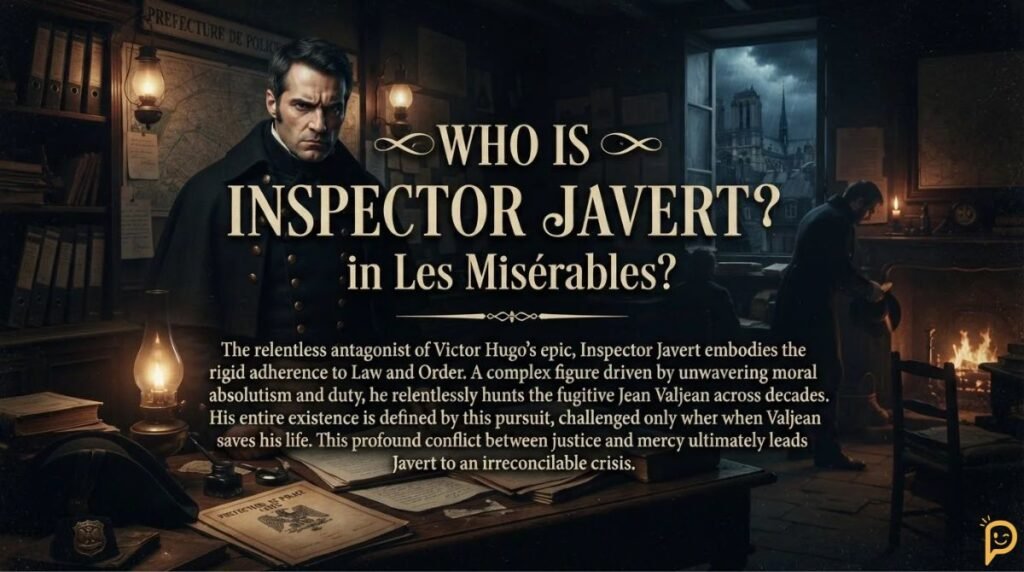
Inspector Javert is one of the central literary characters in Victor Hugo’s Les Misérables. He serves as a police officer who takes his responsibilities extremely seriously. His main objective is to maintain public order and arrest people who break the law. Jean Valjean becomes his greatest target after escaping prison and living under a different identity. Javert recognizes Valjean as a former prisoner and refuses to forget his criminal record. His determination creates tension throughout the novel and makes him a major antagonist.
Javert’s personality combines discipline, courage, honesty, and stubbornness. He doesn’t appear interested in wealth or personal rewards. Instead, he wants to perform his duties without compromise. His authority and discipline make him a powerful figure within the police system. However, his black-and-white thinking prevents him from recognizing that people can change. He judges individuals according to their legal records rather than their current actions. This becomes the central weakness in his character. His strict beliefs eventually create a conflict that he cannot overcome.
Javert’s Role as a Police Inspector
Javert works as a police inspector responsible for investigating crimes and maintaining public order. He watches people carefully and believes that criminals must face the consequences of their actions. Throughout the novel, he follows Jean Valjean across different places and identities. His relentless pursuit makes him a constant threat to Valjean’s new life. He also becomes involved in the events surrounding Fantine, whose suffering reveals the harsh effects of rigid authority. Through Javert’s actions, Hugo examines how law enforcement can become harmful when officers ignore human circumstances.
The Personality Traits That Define Javert
Javert’s personality is serious, disciplined, observant, and extremely determined. He rarely allows personal feelings to influence his professional decisions. He respects authority and expects everyone else to do the same. His strongest quality is his commitment to his duties. However, that same quality becomes his greatest weakness. He struggles to recognize kindness in someone with a criminal past. His moral certainty leaves no room for doubt, making him unable to handle situations that challenge his beliefs.
Why Javert Constantly Pursues Jean Valjean
Javert pursues Jean Valjean because Valjean breaks his parole and escapes the legal system. Javert believes that a person with a criminal record cannot simply become respectable by changing his behavior. When Valjean adopts a new identity and begins helping others, Javert remains suspicious. He considers the escape a continuing violation that demands punishment. Their conflict becomes more personal as the story develops. Valjean represents the possibility of redemption, while Javert represents a system that struggles to accept second chances.
You May Also Like: ATM Meaning in Text: What It Means, Examples, and How to Use It
What Does Javert Symbolize in Les Misérables?
Javert symbolism is one of the most important parts of understanding his character. He represents a system where laws and authority stand above individual circumstances. His belief in absolute law makes him certain that every criminal deserves punishment. He doesn’t consider poverty, suffering, or personal transformation strong reasons to change a judgment. Through Javert, Hugo explores the danger of legalism when people follow rules without examining their fairness. His character also shows how law and order can lose their purpose when society forgets compassion and human dignity.
However, Javert doesn’t represent only negative qualities. His honesty, discipline, and refusal to accept bribes show that he values professional integrity. The problem lies in his inability to balance these qualities with kindness and understanding. His moral absolutism prevents him from recognizing that a person can make mistakes and still become good. This contrast makes Javert a complex symbol of the conflict between law and morality. Hugo encourages readers to question whether justice should focus only on punishment or also consider personal growth, forgiveness, and the possibility of change.
Javert as a Symbol of Law and Authority
Javert represents the power of government institutions and the importance society places on legal authority. He trusts official rules more than personal judgment. In his mind, the law provides a clear answer to every moral question. This belief makes him a symbol of strict justice and unwavering duty. Yet Hugo shows that authority can become dangerous when people stop questioning its decisions. A law enforcement officer should protect society, but protection requires judgment and humanity. Javert’s character reveals what happens when authority becomes more important than the people it serves.
The Difference Between Legal Justice and Moral Justice
Legal justice focuses on laws, evidence, and established punishments. Moral justice considers intentions, circumstances, responsibility, and the possibility of personal change. Javert trusts the first system completely. Jean Valjean gradually learns to follow the second through kindness and sacrifice. Their opposing views create one of the novel’s strongest conflicts. For example, Valjean breaks the law when he escapes prison, but he later spends his life helping others. Javert struggles to accept this contradiction. Hugo uses their experiences to show that right and wrong cannot always fit into simple categories.
What Javert Teaches Readers About Mercy and Compassion
Javert teaches readers that rules alone cannot solve every human problem. His inability to show sympathy creates unnecessary suffering and eventually destroys his own peace. Valjean offers a different example through his actions toward Fantine, Cosette, and even Javert himself. His choices demonstrate human compassion and the power of forgiveness. These moments suggest that justice should protect people without ignoring their dignity. Javert’s tragedy reminds readers that compassion isn’t weakness. Sometimes, understanding another person’s situation requires greater strength than simply enforcing a rule.
Ten important symbolic meanings associated with Javert:
| Symbolic meaning | What it represents |
| Law | Strict obedience to legal rules |
| Authority | Respect for government institutions |
| Discipline | Complete commitment to duty |
| Punishment | Consequences for breaking laws |
| Order | Society’s need for stability |
| Moral rigidity | Refusal to question personal beliefs |
| Legalism | Following rules without considering circumstances |
| Judgment | Evaluating people through their past actions |
| Conflict | The struggle between law and compassion |
| Tragedy | The destruction caused by inflexible beliefs |
Javert and Jean Valjean: The Relationship Behind the Meaning

The relationship between Javert and Jean Valjean gives Les Misérables much of its emotional power. They represent two different ways of understanding human behavior. Valjean begins as a prisoner who struggles to rebuild his life after serving nineteen years in prison. A bishop’s kindness encourages him to change his ways and help others. Javert, however, sees him mainly as a criminal who escaped punishment. Their opposing views create a continuous struggle between personal transformation and legal judgment. Javert and Jean Valjean become two sides of the novel’s larger debate about justice.
Their relationship becomes even more important when Valjean gets the chance to kill Javert but chooses to spare him. This moment challenges everything Javert believes about criminals. He expects a man with a criminal past to act selfishly or violently. Instead, Valjean shows him kindness when revenge seems possible. Later, Javert finds himself unable to arrest Valjean after witnessing his compassion. Their relationship reveals the difference between strict obedience and moral responsibility. It also explains why Javert’s inner conflict becomes impossible to ignore.
Why Does Javert Hate Jean Valjean?
Javert doesn’t simply dislike Jean Valjean because of a personal disagreement. He sees Valjean as someone who repeatedly escapes the punishment required by law. Valjean’s new identity makes Javert suspicious because he believes criminals rarely change. Every time Valjean avoids arrest, Javert feels that justice remains incomplete. His pursuit becomes almost personal because Valjean challenges the system that gives Javert his purpose. However, the deeper problem isn’t hatred alone. Javert cannot accept the possibility that someone can have a criminal past and a good heart.
Javert vs. Jean Valjean: Two Opposing Views of Justice
Javert and Valjean offer two very different ideas about justice. Javert believes that a person’s past determines how society should treat them. Valjean believes that people deserve opportunities to improve their lives. Their differences become clearer through their decisions and relationships with others. The following comparison explains their opposing personalities and beliefs.
| Javert | Jean Valjean |
| Believes strongly in strict laws | Believes in personal redemption |
| Values authority above personal feelings | Values compassion and kindness |
| Judges people through their criminal records | Recognizes the possibility of change |
| Sees punishment as essential to justice | Sees forgiveness as part of justice |
| Follows rules without questioning them | Makes difficult moral decisions |
| Struggles to accept mercy | Shows mercy to others |
How Jean Valjean Challenges Javert’s Beliefs
Jean Valjean challenges Javert by proving that a criminal can become a compassionate and responsible person. His actions toward Cosette, Fantine, and Marius show that his transformation is genuine. The strongest challenge comes when he releases Javert instead of killing him. This unexpected act of kindness forces Javert to reconsider his judgment. Suddenly, the man he considers a criminal demonstrates greater mercy than the officer who claims to uphold justice. Valjean’s actions create a moral dilemma that Javert cannot solve using his old beliefs.
How Javert’s Beliefs About Justice Lead to His Downfall

Javert’s beliefs initially make him appear strong and confident. He trusts the legal system and believes that every person must obey its rules. However, his confidence depends on one assumption: people cannot truly change. Jean Valjean slowly proves that assumption wrong through his actions. When Javert witnesses Valjean’s kindness, he faces a reality that his personal beliefs cannot explain. His inner conflict begins when the man he considers a criminal shows more humanity than he expects from anyone. For the first time, Javert must question whether his understanding of justice has always been correct.
The turning point comes when Javert experiences mercy from someone he has spent years trying to arrest. He cannot easily accept that a former convict can act with such generosity. His entire identity depends on the belief that the law represents the highest form of justice. Now, he must choose between his professional duty and the evidence in front of him. This creates a painful moral dilemma that destroys his sense of certainty. His inability to accept change becomes the reason behind his downfall. Hugo shows that strong principles can become destructive when people refuse to examine them.
Why Javert Cannot Accept Mercy From Jean Valjean
Javert cannot accept mercy because it challenges the foundation of his identity. He believes criminals deserve punishment and that law-abiding people must enforce it. Yet Jean Valjean gives him freedom when he has every reason to seek revenge. This action creates a contradiction that Javert cannot resolve. If Valjean is truly evil, why does he behave so kindly? If Valjean is good, how can Javert continue treating him as nothing more than a criminal? These questions shake his entire understanding of justice.
The Moment That Changes Javert’s Understanding of Justice
The defining moment occurs during the Paris uprising of 1832. Javert becomes a prisoner of the revolutionaries at the barricade. Valjean receives permission to deal with him and could easily kill him. Instead, he secretly releases Javert and allows him to escape. This unexpected act changes their relationship completely. Later, Javert encounters Valjean again while he carries the wounded Marius through the Paris sewers. Rather than immediately arresting him, Javert allows him time to take Marius home. The encounter shows that mercy has affected both men in unexpected ways.
How Mercy Challenges Javert’s Entire Worldview
Before meeting Valjean, Javert believes that justice requires clear rules and firm punishment. Mercy introduces an idea he has never seriously considered. He begins to understand that goodness doesn’t always follow legal categories. A person can break the law and still demonstrate remarkable kindness. This discovery makes his previous certainty feel unreliable. His character transformation doesn’t lead to peace because he cannot build a new understanding of morality. Instead, mercy exposes the weakness of his old worldview without giving him another foundation.
You May Also Like: ATM Meaning in Text: What It Means, Examples, and How to Use It
Why Does Javert Die in Les Misérables?
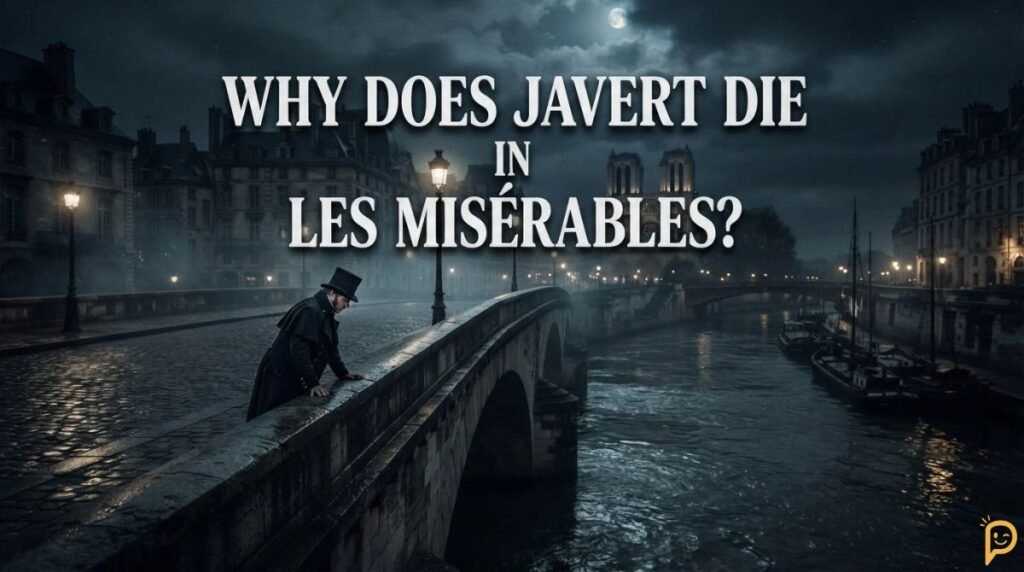
Javert dies because he cannot reconcile his lifelong beliefs with the mercy he receives from Jean Valjean. After Valjean releases him, Javert faces a serious crisis of conscience. He knows that his duty requires him to arrest Valjean. However, he also recognizes the goodness of the man who spared his life. These opposing truths create an unbearable struggle. His final decision comes after he realizes that he can no longer follow his old principles with complete confidence. He also cannot imagine living according to a different understanding of justice. This conflict leads him toward a tragic ending.
Near the end of the novel, Javert walks through Paris and eventually throws himself into the Seine River. His death reflects the collapse of the belief system that once controlled his entire life. He cannot accept that law and morality may sometimes disagree. He also struggles to understand why someone he considers a criminal would show him such kindness. Through Javert’s death, Victor Hugo explores the danger of rigid thinking and the emotional cost of refusing to question personal beliefs. His ending is tragic because he cannot find a way to live with the new truth he has discovered.
What Happens to Javert at the End of the Story?
At the end of Les Misérables, Javert experiences a deep moral crisis after letting Jean Valjean go free. He cannot return to his previous life because his understanding of justice has changed. However, he cannot fully accept Valjean’s example either. He walks alone through Paris while struggling with his thoughts. Eventually, he decides that he cannot continue living with the contradiction between his duties and his conscience. His final moments reveal how deeply his beliefs have shaped his identity.
Why Does Javert Choose to End His Life?
Javert chooses to end his life because he cannot reconcile his commitment to the law with the compassion shown by Valjean. His worldview offers no room for a criminal to become genuinely good. Yet Valjean’s actions provide clear evidence against that belief. Javert also cannot accept the idea of abandoning the legal principles that have guided him for years. His decision comes from this devastating conflict rather than a simple disagreement with another person. His death represents the collapse of an identity built entirely around certainty and obedience.
What Does Javert’s Death Symbolize?
Javert’s death symbolizes the destruction of a rigid belief system when reality challenges its basic assumptions. It also highlights the difference between legal judgment and moral understanding. His ending contrasts sharply with Valjean’s journey toward forgiveness and redemption. While Valjean grows through compassion, Javert cannot adapt to the same lesson. Hugo uses this contrast to show that people need more than rules to understand humanity. Javert’s tragic ending becomes a warning about the dangers of absolute certainty.
Is Javert a Villain or a Tragic Character?
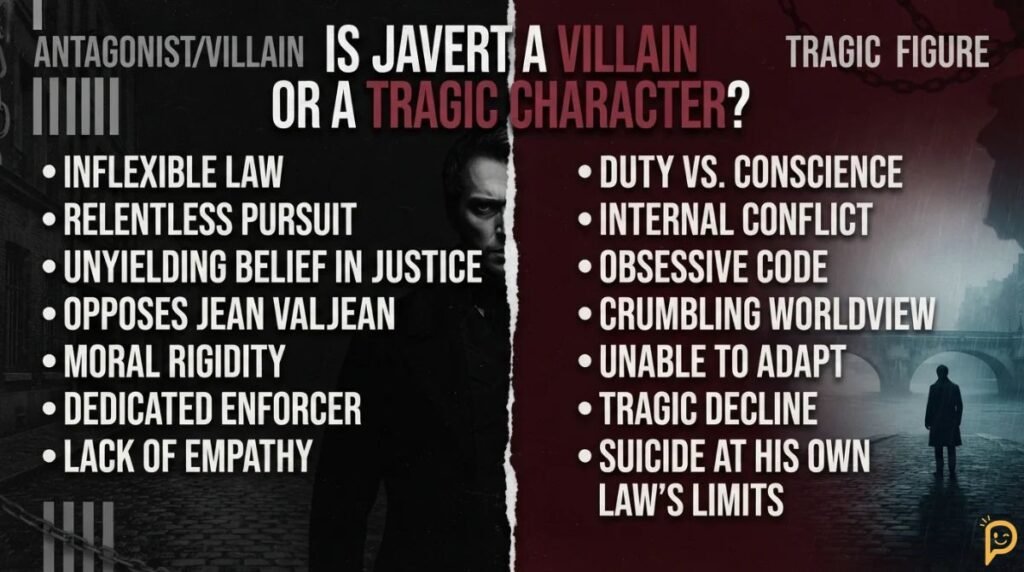
Javert is often viewed as a villain because he spends much of the novel pursuing Jean Valjean. His actions create fear and pressure for people who are already struggling. He also treats individuals according to legal rules without always considering their personal circumstances. However, calling him simply evil misses an important part of his character. Javert genuinely believes that his work protects society. He doesn’t chase Valjean for money or personal pleasure. Instead, he follows his understanding of justice with complete dedication. This makes him a complicated antagonist rather than a traditional villain.
At the same time, Javert can be understood as a tragic character because his strongest quality becomes his greatest weakness. His honesty, discipline, and commitment to duty initially appear admirable. Yet his moral rigidity prevents him from accepting new information about human nature. When Valjean demonstrates genuine goodness, Javert cannot adjust his beliefs. His downfall grows from the same principles that once gave him purpose. This makes Javert as a tragic character an important part of the novel’s meaning. Hugo encourages readers to understand his struggle without ignoring the harm caused by his actions.
Why Javert Is Considered a Villain
Javert appears villainous because he constantly threatens Valjean’s freedom and refuses to recognize his personal growth. He represents an oppressive side of the legal system. His treatment of Fantine also shows how strict enforcement can hurt vulnerable people. Rather than considering her suffering, he initially focuses on her violation of public order. These actions make him an obstacle to the happiness and safety of other characters. However, his motivations come from a sincere belief in authority rather than a desire to cause suffering.
Why Javert Is Also a Tragic Character
Javert is also tragic because he cannot escape the limits of his own thinking. He has spent his entire life trusting one system of morality. When that system fails to explain Valjean’s kindness, he loses his sense of direction. He doesn’t know how to accept mercy or develop a more flexible understanding of justice. His downfall becomes especially painful because he never intended to become a cruel or misguided person. His story shows how personal destruction can follow when someone refuses to question deeply held beliefs.
What Makes Javert Different From Other Literary Antagonists?
Many literary villains knowingly choose selfishness, cruelty, or personal gain. Javert is different because he believes his actions serve a greater purpose. He considers himself a protector of society rather than an enemy of humanity. His honesty and discipline make his character more complex. However, his refusal to consider individual circumstances creates serious problems. Unlike a traditional villain, Javert doesn’t experience a simple defeat by the hero. Instead, his own beliefs become the force that destroys him.
Conclusion: The Deeper Meaning Behind Javert
The deeper Javert meaning comes from his struggle with law, justice, and human compassion. He represents a person who believes that rules must always come before personal feelings. His dedication to authority makes him a powerful police inspector. However, his inability to recognize personal transformation becomes his greatest weakness. Through his relationship with Jean Valjean, Victor Hugo shows that people aren’t defined forever by their past mistakes. His character also reminds readers that justice requires understanding, fairness, and compassion.
Ultimately, Javert is more than a police inspector or a determined antagonist. He represents the dangers of moral absolutism and the consequences of refusing to accept change. His tragic ending makes readers question whether following every rule automatically makes someone righteous. Meanwhile, Jean Valjean demonstrates how mercy and forgiveness can transform lives. That’s what makes Javert such an unforgettable character in Les Misérables. His story leaves readers with one important lesson: true justice must recognize humanity, not just enforce rules.
FAQ’s About Javert Meaning
What does Javert symbolize?
Javert symbolizes strict justice, law and order, moral rigidity, and the dangers of following rules without compassion.
Who is the most famous Javert?
Inspector Javert, the relentless police inspector in Victor Hugo’s novel Les Misérables, is the most famous character with this name.
How do you pronounce Javert in Les Misérables?
Pronunciation
1×PlayStop
Javert
zhah-VAIR
Practice in VoiceAdd to flashcards
Give feedback
Who played the character of Javert in Les Misérables?
Several actors have portrayed Javert, including Russell Crowe in the 2012 film and Philip Quast in the 1985 stage musical.
Why did Javert commit suicide?
Javert couldn’t reconcile his strict belief in the law with Jean Valjean’s kindness and mercy. This inner conflict shattered his worldview, leading him to jump into the Seine.
You May Also Like: ATM Meaning in Text: What It Means, Examples, and How to Use It

I’m a content writer and wordplay enthusiast who loves creating clever, funny, and original puns. My goal is to bring readers fresh humour, witty jokes, and creative content that adds a smile to their day.