

The emoji laughing faces have become a fun way to express humor, joy, and playful reactions in everyday conversations. Whether you’re texting friends, sharing memes, or posting on social media, the right laughing emoji can make your message feel more lively. From 😂 (Face with Tears of Joy) to 🤣 (Rolling on the Floor Laughing), each emoji adds its own personality to your words.
However, these funny symbols can sometimes express sarcasm, teasing, or even disbelief. Understanding different laughing emoji meanings helps you choose the perfect reaction for every situation. Explore popular types of laughing emojis, discover their meanings, and find hilarious examples to make your chats more entertaining and memorable.
What Does the Emoji Laughing Mean?

The laughing emoji meaning usually relates to amusement, happiness, or a funny moment. The familiar 😂 symbol is officially called the Face With Tears of Joy emoji. It shows a smiling face with tears at the corners of its eyes. People use it when a joke makes them laugh or a situation feels hilarious. The expression of joy can also help a message sound warm and friendly. For example, “You walked into the wrong classroom again 😂” makes a simple story feel playful. This kind of online communication adds emotion to words that might otherwise sound flat.
However, not every laughing face carries the same message. Some laughing emoji expressions suggest a quiet chuckle, while others show uncontrollable laughter or exaggerated amusement. A person might use 😂 to react to a friend’s joke or 🤣 after watching something ridiculous. Another person may send a laughing face to hide embarrassment or soften an uncomfortable reply. That’s why emoji interpretation depends on context, relationships, and tone. When you understand those small differences, you can choose a more suitable emoji and avoid sending the wrong message.
The Meaning Behind the Laughing Emoji
The laughing face emoji gives written conversations a little personality. It can show that you’re amused, joking, or enjoying someone’s funny story. The face with tears of joy emoji often represents laughter so strong that tears appear. For example, “My dog stole my sandwich and ran away 😂” clearly communicates amusement. In contrast, 😅 often suggests nervous laughter or relief after a close call. Although these faces look similar, their meanings aren’t always interchangeable.
Why People Use Laughing Emojis in Text Messages
People use laughing emojis because written words don’t always show emotion clearly. A short reply like “Nice job” might sound sincere or sarcastic without extra context. Adding 😂 can make the playful meaning easier to understand. These digital messages become more expressive when people use emojis naturally. Friends may laugh at silly mistakes, couples may tease each other, and coworkers may react to harmless office jokes. Still, the best emoji is the one that fits the conversation rather than one added to every sentence.
How Context Changes the Meaning of a Laughing Emoji
Context can change a laughing emoji from friendly to uncomfortable in seconds. Imagine telling a friend that you tripped over your own shoelaces. Their 😂 might show sympathy mixed with amusement. Now imagine sharing a serious problem and receiving the same emoji. It might feel dismissive instead. These differences explain why people should consider the message, relationship, and situation before reacting. When you’re unsure, a quick question can prevent a small misunderstanding from becoming a bigger problem.
Different Types of Laughing Emojis and Their Meanings

There are many types of laughing emojis, and each one can express a slightly different mood. The familiar 😂 usually shows laughter or strong amusement, while 🤣 suggests an exaggerated reaction. The 😆 face conveys a big grin with tightly closed eyes. Meanwhile, 😅 often communicates nervous laughter, relief, or an awkward moment. These different laughing emojis help people express feelings without explaining everything in words. Their official names and designs can be checked through the Unicode Emoji List, which provides useful reference information about Unicode emoji characters.
Choosing the right face depends on what you want to communicate. Use 😂 when a friend’s story makes you laugh, or try 😹 when a cat video deserves a playful reaction. The 😄 emoji often feels cheerful and friendly, while 😅 works well when something almost goes wrong. No symbol has one fixed meaning in every conversation. People develop their own habits, and online trends can influence how they use emojis. Learning these differences makes your replies clearer and your funny conversations more natural.
Face With Tears of Joy 😂
The 😂 emoji shows a smiling face with tears coming from its eyes. People often use it when something feels extremely funny or unexpectedly ridiculous. It can represent laughing and crying at the same time, without suggesting sadness. This emoji works well in casual chats, funny comments, and reactions to amusing stories. For example, your friend might say, “I waved at someone who wasn’t waving at me 😂.” That tiny symbol captures the embarrassment and laughter in one quick reaction.
Rolling on the Floor Laughing 🤣
The 🤣 emoji represents intense laughter and is commonly known as the rolling on the floor laughing emoji. Its official name is Rolling on the Floor Laughing. People often connect it with rolling on the floor laughing (ROFL), an expression used for something extremely funny. The ROFL emoji can make a reaction sound dramatic, especially after an unexpected punchline. For example, “He practiced his speech for hours and forgot his own name 🤣” shows how the symbol can emphasize a ridiculous situation.
Grinning Squinting Face 😆
The 😆 emoji features a wide grin and tightly closed eyes. It often communicates strong amusement, playful excitement, or a hearty laugh. Unlike 😂, it doesn’t include tears, so the expression may feel a little simpler. You might use it after a friend shares a silly joke or describes a harmless mistake. For example, “You really wore two different shoes to work 😆” keeps the message teasing rather than harsh. It’s a useful choice when you want to show laughter without making the reaction seem overly dramatic.
Grinning Face With Smiling Eyes 😄
The 😄 emoji shows a broad smile with happy eyes. It often expresses cheerfulness, friendly amusement, and a positive mood. Although people sometimes use it as a laughing face, it doesn’t always suggest uncontrollable laughter. For instance, “We finally finished the project 😄” communicates relief and happiness. This emoji works well when you want your message to feel welcoming. It’s also a useful alternative when 😂 feels too intense for the moment.
Cat Face With Tears of Joy 😹
The 😹 emoji combines a cat’s face with tears of laughter. It works especially well in conversations about pets, silly animals, and funny cat videos. The symbol can make a reaction feel cute and exaggerated at the same time. For example, “My cat chased its own tail for ten minutes 😹” gives the story a playful finish. People who enjoy animal humor may prefer this symbol over a standard laughing face. It’s a small way to make pet-related conversations even more entertaining.
Other Emojis That Can Express Laughter
Several funny face emojis can communicate amusement without showing tears. The 😁 emoji expresses a big grin, while 😅 often signals awkward laughter or relief. The 😹 emoji adds a cat-themed twist, and 😄 conveys a cheerful smile. These laughing emoji alternatives give you more ways to match your reaction to the moment. For example, “I nearly sent that message to the wrong person 😅” suggests nervous relief rather than pure amusement. Choosing carefully helps your message sound more natural and less repetitive.
What Is the Difference Between 😂 and 🤣?
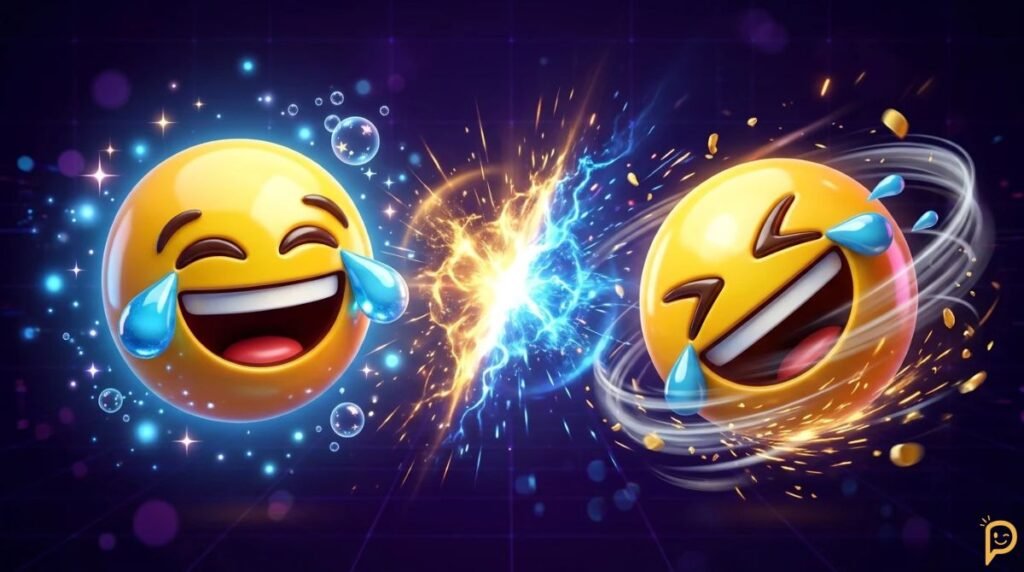
The main difference between 😂 and 🤣 lies in their imagery and common use. The 😂 emoji shows a face with tears of joy, while 🤣 depicts a face tilted sideways with tears of laughter. People often use 😂 for everyday jokes and funny conversations. The 🤣 emoji can suggest a more exaggerated reaction, as if someone can’t stop laughing. Both symbols communicate amusement, but neither one automatically means a joke is funnier. Personal habits and context play a major role in how people read these faces.
For example, imagine your friend texts, “I forgot my coffee and drove back home in slippers.” You might respond with 😂 because the mistake sounds funny. If your friend follows up with an even more ridiculous story, 🤣 might fit better. These are common patterns rather than strict rules. The 😂 emoji meaning and 🤣 emoji meaning can overlap, especially among people who use them interchangeably. Choose the one that feels right for your conversation instead of worrying about an exact ranking.
Tears of Joy Emoji Meaning
The tears of joy emoji 😂 often expresses laughter, delight, and amusement. It works well for everyday jokes, funny mistakes, and unexpected punchlines. Many people also use it as a quick reaction when they don’t know what to say. For example, “My alarm rang, and I turned it off in my sleep 😂” communicates a relatable moment without further explanation. The tears of joy emoji can also soften teasing between friends. However, a serious conversation may call for a more thoughtful response than a laughing face.
Rolling on the Floor Laughing Emoji Meaning
The rolling on the floor laughing emoji 🤣 represents a dramatic reaction to something funny. Its image suggests laughter so intense that someone might roll on the floor. People often use it with internet expressions such as laughing out loud (LOL) and ROFL. Although LOL and ROFL both communicate amusement, they don’t describe the same visual action. For example, “He searched everywhere for his phone while holding it 🤣” gives the emoji a clear purpose. It emphasizes the absurdity of the situation.
Which Laughing Emoji Shows More Laughter?
Many people treat 🤣 as a stronger reaction than 😂 because it depicts someone rolling around with laughter. However, emoji intensity isn’t officially measured. One person might use 😂 for every joke, while another saves 🤣 for truly ridiculous moments. The sender’s habits matter more than a universal rule. Both emojis can express extreme amusement, and either one may fit a funny conversation.
| Emoji | Common meaning | Example situation |
| 😂 | Laughter and tears of joy | A friend’s funny story |
| 🤣 | Exaggerated or intense laughter | An unexpected comic moment |
| 😆 | Big grin and strong amusement | A playful joke |
| 😅 | Nervous laughter or relief | Escaping an awkward mistake |
| 😹 | Cat-themed laughter | A funny pet video |
When to Use Each Laughing Emoji
Use 😂 when you want to react naturally to a joke, meme, or amusing message. Choose 🤣 when you want to make your reaction feel dramatic. The 😆 emoji suits playful teasing, while 😅 works better for awkward or nervous moments. For example, “I called my teacher Mom 😅” suggests embarrassment rather than a huge laugh. These choices can make your laughing emoji reactions more expressive. The goal isn’t to follow strict rules. It’s to help the person reading your message understand your mood.
You May Also Like: 250+ Funny Text Messages That Will Make You Laugh Out Loud
How to Use the Emoji Laughing in Text Messages
The laughing emoji in text messages helps you share humor without writing a long explanation. You can use it after a funny story, a playful insult between friends, or a ridiculous everyday mistake. Emojis also help show that a teasing comment isn’t meant to sound harsh. For example, “You said you’d be ready in five minutes an hour ago 😂” sounds more playful with the emoji. Without it, the same words might feel annoyed. A well-placed symbol can change the tone of an entire message.
Still, adding laughing faces to every reply can make your messages feel repetitive. Choose emojis that match the joke and your relationship with the recipient. A funny exchange with your best friend might include several emojis, while a message to your manager may need a lighter touch. Good text message conversations balance words and symbols rather than relying on emojis alone. Try the examples below for inspiration, then adapt them to your own chats.
Laughing Emojis in Conversations With Friends
Friends often use laughing emojis to tease each other about harmless mistakes, funny habits, and everyday chaos. Shared jokes make these messages feel personal. Here are ten original laughing emoji examples you can use in casual conversations.
- “You said you were five minutes away while still wearing pajamas 😂”
- “Your cooking has officially made the smoke alarm a food critic 🤣”
- “I opened the fridge three times like new snacks would magically appear 😂”
- “You laughed at your own joke before finishing it 😆”
- “We need adult supervision for our shopping trips 🤣”
- “You sent me a voice note just to sneeze 😂”
- “Our plans lasted longer in the group chat than in real life 😭😂”
- “You lost your glasses while wearing them 😆”
- “We went out for one snack and returned with an entire grocery store 🤣”
- “Your sense of direction deserves its own comedy show 😂”
These messages work because they focus on familiar situations. Keep teasing light and friendly so the joke doesn’t hurt anyone’s feelings.
Using Laughing Emojis With Family and Partners
Family members and romantic partners often use laughing emojis to make everyday conversations warmer. A playful message can turn a small household mishap into a shared joke. For example, “You told me not to buy snacks and then ate mine 😂” sounds lighthearted. Here are ten more messages for family and partners.
- “Mom said she wouldn’t tell anyone, and the entire family knows 😂”
- “Dad’s five-minute repair has entered its third business day 🤣”
- “You stole my fries again. This relationship needs a snack agreement 😂”
- “Our family photo took forty tries and still looks chaotic 😆”
- “You asked where the remote was while sitting on it 😂”
- “I love you even when you steal all the blankets 🤣”
- “Grandpa learned one emoji and now sends it after every sentence 😂”
- “We planned a romantic dinner and burned the garlic bread 😅”
- “My sibling borrowed my hoodie and started a new life in it 🤣”
- “You said you weren’t hungry, then ate half my dessert 😂”
Use these examples to keep conversations affectionate and funny. If a joke touches a sensitive subject, make sure the other person enjoys that kind of teasing.
Funny Text Message Examples With Laughing Emojis
Sometimes, the funniest texts come from tiny disasters. Autocorrect changes a sentence, a delivery arrives at the wrong door, or someone forgets why they entered a room. These examples show how digital expressions of laughter can make everyday moments more entertaining.
- “Autocorrect turned ‘See you soon’ into ‘See you spoon’ 😂”
- “I searched for my phone using the flashlight on my phone 🤣”
- “My calendar reminded me to relax, so I scheduled a panic attack 😅”
- “I went to the kitchen and forgot my entire mission 😂”
- “My online order arrived, and now I don’t remember what I bought 🤣”
- “I waved at someone who was waving at the person behind me 😭😂”
- “I cleaned my room by moving everything onto the chair 😆”
- “My diet started when I bought the groceries. It ended at checkout 😂”
- “I opened a new tab and forgot what I wanted to search 🤣”
- “My bank account saw my shopping cart and logged out 😂”
These messages make strong conversation starters because they’re easy to recognize. You can also personalize them with situations that your friends experience.
When a Laughing Emoji Is the Perfect Reply
A laughing emoji works best when someone shares a joke or a moment that clearly invites humor. It can also keep a conversation moving when a full sentence feels unnecessary. However, not every message deserves a laughing response. If someone shares bad news or expresses genuine frustration, a supportive reply is usually better. These examples show when a laughing emoji fits naturally.
- Friend: “I practiced my presentation and forgot the first slide.” You: “😂”
- Friend: “The dog stole my sandwich again.” You: “🤣”
- Friend: “I just called my boss Dad.” You: “😅”
- Friend: “My cake looks like a collapsed building.” You: “😂”
- Friend: “I walked into the wrong meeting.” You: “Oh no 😂”
- Friend: “My cat knocked over the same plant again.” You: “😹”
- Friend: “I wore my shirt backward all morning.” You: “How did nobody notice? 😂”
- Friend: “I sent the meme to the person it was about.” You: “Oh, that’s dangerous 🤣”
- Friend: “I forgot why I walked into this room.” You: “A classic 😂”
- Friend: “I bought a planner and forgot to use it.” You: “The planner is planning nothing 🤣”
The right reply depends on the situation. A thoughtful sentence can be more helpful than an emoji when someone needs support.
What Does the Laughing Emoji Mean on Social Media?
Laughing emojis are a familiar part of laughing emojis on social media, where people use them to react to jokes, videos, photos, and comments. A single 😂 can show that a post made someone laugh, while 🤣 may emphasize a more dramatic reaction. People also combine emojis with captions to add personality and make their posts feel less formal. These social media reactions help creators and viewers communicate quickly. However, a laughing reaction doesn’t always mean someone agrees with the post or finds its subject harmless.
Different platforms encourage different styles of humor. Instagram users might add laughing faces to captions, while TikTok viewers may use them under funny clips. Snapchat conversations often feel more personal, and Facebook comments may include jokes between relatives and longtime friends. These habits can change as trends develop. Cultural differences and individual preferences also affect how people interpret emojis. When you understand the context, it’s easier to recognize whether a reaction expresses genuine amusement, playful teasing, or sarcasm.
Laughing Emojis on Instagram and TikTok
On Instagram and TikTok, laughing emojis often appear beside funny clips, short captions, and witty comments. Content creators use them to signal humor or respond to viewers who share a joke. A caption like “Tried to look cool and walked into a glass door 😂” makes an awkward moment feel playful. Viewers might respond with 🤣 or add their own funny comment. These emojis work well when the content is clearly lighthearted. Still, creators should consider the subject before joking about someone else’s embarrassing experience.
Using Laughing Emojis on Snapchat and Facebook
Snapchat and Facebook support casual conversations where friends share photos, stories, and everyday updates. Laughing emojis can acknowledge a funny picture or keep a playful discussion going. For example, someone might post a photo of a lopsided birthday cake and caption it, “Nailed the bakery look 😂.” A friend could reply, “The cake has its own personality 🤣.” Such exchanges show how emojis support friendly humor. The best reaction depends on the relationship and whether the original poster welcomes teasing.
Laughing Emojis in Memes and Online Comments
Memes often rely on familiar situations, surprising captions, and exaggerated reactions. Laughing emojis can reinforce a punchline or make a comment feel more expressive. People may add 😂 to a relatable joke or 🤣 after an unexpected twist. These funny videos and memes can travel quickly because viewers recognize the humor and share it with friends. For example, “Me opening the fridge for the seventh time, hoping for new food 😂” turns an ordinary habit into a relatable joke. However, a laughing reaction can also appear mocking when a meme targets a real person’s hardship.
Why People Use Laughing Emojis in Group Chats
Group chats can turn one funny message into a full comedy show. One friend shares a joke, another adds a meme, and someone else responds with five laughing faces. These conversations often depend on shared experiences and inside jokes. For example, a group planning a trip might spend hours arguing about snacks instead of choosing a destination. Someone could write, “We’re going to need a second vacation to recover from planning this one 🤣.” Laughing emojis help keep the exchange lively. They also make quick reactions easier when many people join the conversation.
Can the Laughing Emoji Be Sarcastic or Rude?
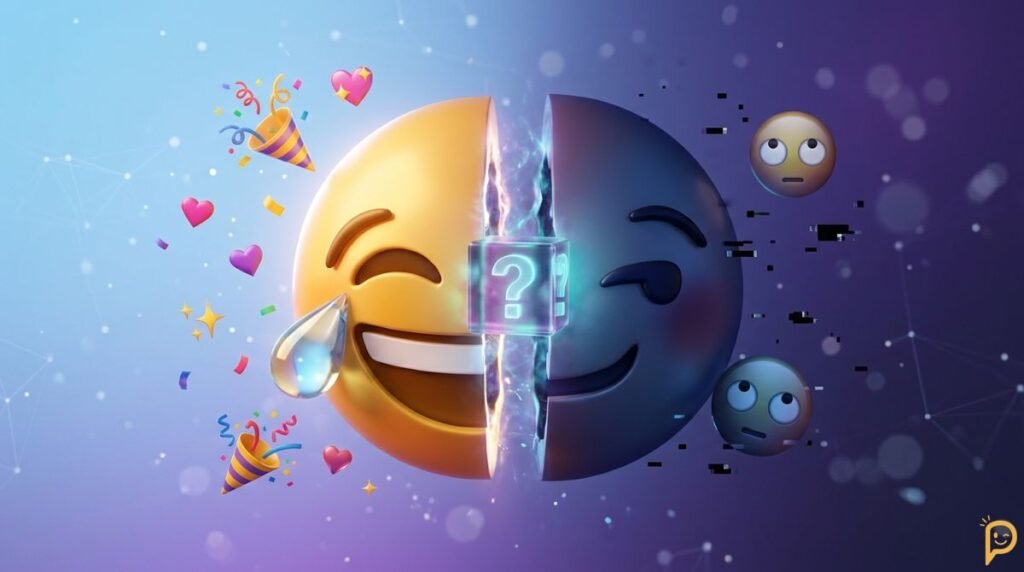
A laughing emoji can express genuine amusement, but it can also suggest sarcasm or mockery. The sarcastic laughing emoji often appears when someone wants to show disbelief, dismiss a claim, or make a sharp joke. For instance, “You said you’d be on time 😂” could sound friendly between close friends. In another conversation, it might feel like criticism. This difference shows why emojis don’t have fixed emotional meanings. The words around them and the relationship between the people involved can change how a message feels.
Sometimes, laughing emojis create tension instead of easing it. A person may use 😂 after a serious complaint to make the other person feel foolish. This can introduce irony and mockery, especially when the message targets someone’s mistake or insecurity. However, it’s easy to misread a short digital reply because you can’t hear the sender’s voice. Before assuming someone intends to insult you, consider the wider conversation. If the meaning remains unclear, ask what they meant rather than letting one tiny symbol ruin your day.
When a Laughing Emoji Means Someone Is Making Fun of You
The pointing and laughing emoji can suggest that someone is laughing at another person rather than sharing a joke with them. A related expression is pointing and laughing in tears, which can describe an image or emoticon showing someone pointing while laughing. Such imagery may communicate ridicule and scorn when it targets a person’s mistake. For example, posting a laughing face beneath someone’s embarrassing photo might feel hurtful rather than funny. Context matters, but so does the target of the joke. Humor should bring people together instead of making someone feel small.
Laughing Emojis as Sarcasm or Passive-Aggressive Replies
Sarcasm often uses words that mean one thing while suggesting another. Adding 😂 can make that contrast more obvious, although the intention still depends on context. Imagine someone writes, “Amazing job leaving the door open all night 😂.” They might be teasing a friend, or they might be expressing real frustration. The same symbol can soften a complaint or sharpen it. When a message feels passive-aggressive, look at the wording and the history between you. One emoji alone rarely proves what the sender intended.
How to Tell Friendly Laughter From Mockery
Friendly laughter usually accompanies a joke that everyone involved can enjoy. Mockery often singles out a person, especially when the joke concerns a sensitive mistake or personal trait. Compare “We both took the wrong bus 😂” with “You took the wrong bus again, genius 😂.” The first shares the embarrassment, while the second may criticize someone. These examples show how making fun of someone can feel different from laughing together. If you’re unsure, consider the relationship, timing, and tone. A direct but calm question can clear up confusion.
Why Laughing Emojis Can Cause Misunderstandings
Text removes many clues people rely on during face-to-face conversations. You can’t hear someone’s voice or see their expression, so a short reply may seem colder than intended. Facial expressions and body language often help people understand whether laughter is friendly or sarcastic. Digital messages don’t always provide those clues. Generational differences and personal habits can add another layer of confusion because people may use the same emoji differently. When the topic is serious, clear words can prevent unnecessary misunderstandings.
You May Also Like: 250+ Funny Text Messages That Will Make You Laugh Out Loud
Best Laughing Emoji Combinations and Funny Examples
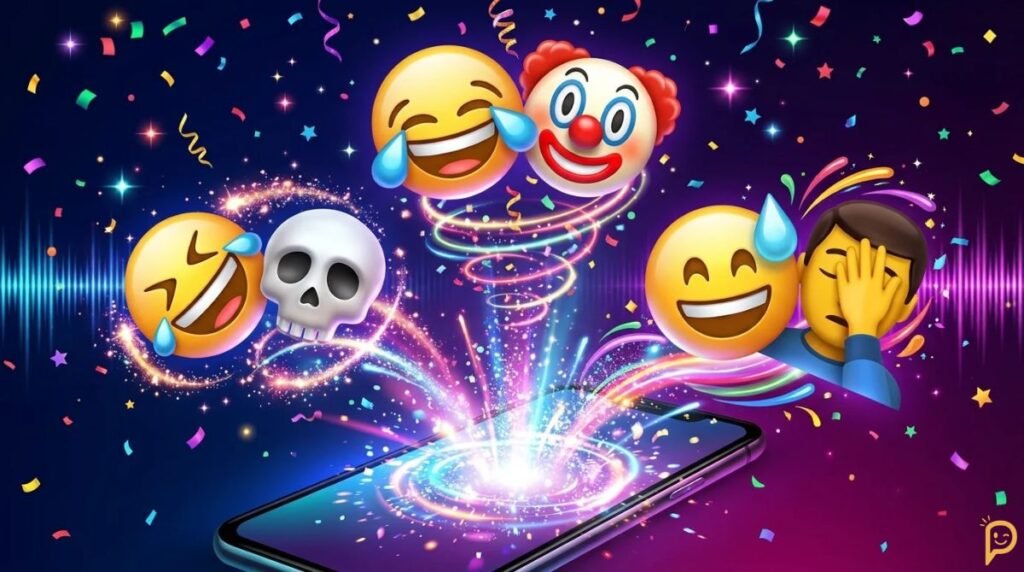
Laughing emoji combinations help people express reactions that one symbol may not capture. For example, 😂🤣 can suggest a big laugh, while 😭😂 often exaggerates how funny something feels. The 🤣💀 pairing is also used online to suggest that something is so hilarious that the person is figuratively “dead” from laughter. These emoji combinations often depend on internet slang and shared online habits. Their meanings aren’t universal, so readers should consider the surrounding message before interpreting a pairing.
You can use combinations in texts, captions, group chats, and replies to funny videos. The key is to keep them relevant and avoid crowding every message with symbols. A short caption with one or two emojis often feels clearer than a long row of unrelated faces. The examples below offer ideas for laughing emoji copy and paste use. Adapt them to your own style, and remember that the funniest reaction is often the simplest one.
Funny Laughing Emoji Combinations 😂🤣
Try these ten combinations when a joke deserves a bigger reaction. Each pairing has a slightly different tone, so choose one that suits the moment.
- 😂🤣 — “That punchline got me twice.”
- 😭😂 — “I’m laughing so hard I can’t explain this.”
- 🤣💀 — “That joke absolutely finished me.”
- 😆😂 — “I wasn’t ready for that.”
- 😂🙈 — “That’s embarrassing, but hilarious.”
- 😹😂 — “The cat is the real comedian.”
- 😂👏 — “That joke deserves applause.”
- 🤣🔥 — “This joke is on another level.”
- 😅😂 — “That was awkward, but funny.”
- 😂🤦 — “I can’t believe I actually did that.”
These pairings work best when the symbols match the message. A dramatic combination can add humor, but too many emojis may distract from the punchline.
Laughing Emojis With Hearts and Other Faces
Combining laughter with hearts can add warmth to a playful message. For example, 😂❤️ may suggest that something is funny and lovable, while 😆😊 can convey cheerful amusement. These combinations work well between friends, relatives, and romantic partners. Here are ten examples you can adapt for your conversations.
- 😂❤️ — “You’re ridiculous, and I love it.”
- 😆💕 — “You always know how to make me smile.”
- 😹💖 — “Your cat deserves its own comedy show.”
- 🤣🥰 — “You’re hilarious, even when you don’t try.”
- 😂😘 — “You’re impossible, but you’re my favorite.”
- 😅❤️ — “That was awkward, but we’re okay.”
- 😄💛 — “You made my whole day better.”
- 😂🤗 — “Sending you a hug after that disaster.”
- 😆💞 — “Our conversations never stay serious for long.”
- 🤣❤️ — “I can’t take you anywhere.”
These combinations mix affection with humor. Use them when the recipient understands your style and appreciates playful messages.
Best Laughing Emojis for Funny Captions
A good caption gives people a reason to smile before they even read the comments. Laughing emojis can highlight the joke without taking attention away from the words. Try these ten original captions for everyday posts.
- “Trying to act normal after saying the weirdest thing imaginable 😂”
- “My plans were ambitious. My energy had other ideas 🤣”
- “Professional overthinker with a minor in awkward moments 😅”
- “I came, I saw, I forgot why I came 😂”
- “My wallet and I are no longer on speaking terms 🤣”
- “Serving confidence with a side of confusion 😆”
- “That moment when your brain chooses the worst possible time to stop working 😂”
- “A little chaos keeps life interesting 🤣”
- “I need a vacation from the vacation planning 😂”
- “Currently accepting snacks and compliments 😹”
Choose captions that match the photo or video. A natural connection between the words and the emoji makes the joke land better.
Creative Laughing Emoji Replies for Everyday Chats
Quick replies help you join a funny conversation without writing a paragraph. A playful line can also give the other person something to laugh about. Here are ten options for common situations.
- “Please tell me someone recorded that 😂”
- “Your brain really said, ‘Let’s improvise’ 🤣”
- “That plan fell apart faster than my weekend budget 😂”
- “I need the director’s cut of this story 🤣”
- “This is why we can’t have nice things 😆”
- “The confidence was impressive. The result was questionable 😂”
- “I’m laughing, but I also have questions 🤣”
- “Someone give this moment an award 😂👏”
- “That plot twist deserves its own movie 🤣”
- “I would explain, but the evidence speaks for itself 😂”
These replies work best in casual conversations where everyone understands the joke. If the situation is serious, use words that show care instead.
Who Uses Laughing Emojis and When Should You Use Them?
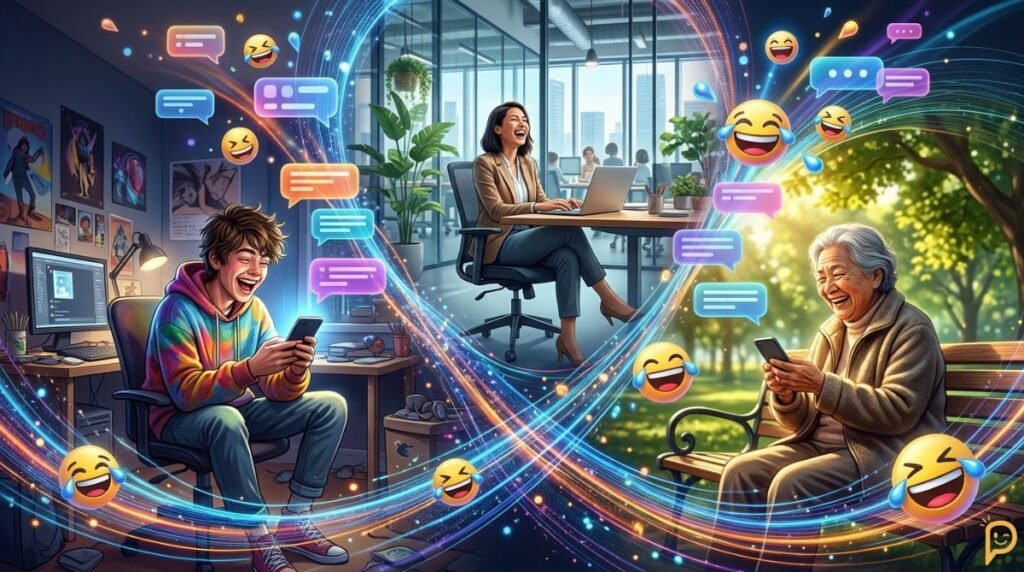
People of all ages use laughing emojis in personal chats, online communities, and social media comments. Some prefer 😂 because it feels familiar, while others use 🤣, 😆, or 😅 to express different moods. Friends may use emojis to share inside jokes, and couples may add them to playful messages. Coworkers sometimes use laughing faces in informal team chats, too. However, emoji habits vary widely between individuals. Cultural differences and personal experiences can influence how someone reads a symbol, so it’s wise to consider your audience.
The best time to use a laughing emoji is when it matches the tone of your message. A funny story or harmless mistake usually welcomes a playful reaction. A serious complaint or sensitive discussion may need a more thoughtful response. In professional settings, follow the tone of the conversation and avoid using humor when it could seem dismissive. Remember that emojis support your words rather than replace them. A well-timed 😂 can brighten a conversation, but a sincere sentence can mean much more when someone needs help.
Laughing Emojis Among Friends and Teenagers
Friends often use laughing emojis to express amusement, tease one another, and react to funny trends. Younger users may also encounter new emoji meanings through memes, creators, and group chats. However, there’s no single emoji style shared by every teenager or friend group. Some people use 😂 constantly, while others prefer newer combinations such as 😭😂 or 🤣💀. These preferences change over time and vary across communities. The best approach is to understand the person you’re messaging instead of assuming that everyone interprets emojis the same way.
Laughing Emojis in Work Chats and Professional Messages
Laughing emojis can make an informal work conversation feel friendlier. For example, a teammate might write, “I joined the meeting on mute and gave a five-minute speech 😂.” A light reaction can help coworkers share a laugh without interrupting the conversation. However, professional settings require judgment. Avoid laughing emojis when discussing serious mistakes, customer complaints, or sensitive workplace issues. If you’re unsure about your team’s style, start with a friendly tone and use emojis sparingly. Clear communication should always come before trying to sound funny.
When You Should Avoid Using Laughing Emojis
Although laughing emojis add personality, some situations call for a different response. Avoid replying with 😂 when someone shares painful news or explains a problem that matters to them. Even if you intend to lighten the mood, the person might feel ignored. A direct response such as “I’m sorry that happened. Are you okay?” shows more care. Similarly, jokes about appearance, personal struggles, or embarrassing moments can hurt when the other person doesn’t share the humor. Before sending an emoji, consider whether it supports the conversation or makes the situation harder.
How Laughing Emoji Habits Differ Across Generations
People sometimes associate particular laughing emojis with different age groups, but those patterns aren’t universal. One person may see 😂 as a normal reaction, while another prefers 😭 to express laughter. Online communities can shape these preferences just as much as age. Generational differences may influence emoji habits, but individual personality and context matter, too. For example, two coworkers of the same age might use completely different symbols. Instead of guessing what someone means based on their generation, pay attention to how they communicate and ask when something seems unclear.
Final Thoughts on Emoji Laughing
Laughing emojis may look like tiny yellow faces, but they can add plenty of meaning to everyday conversations. The 😂 emoji often communicates amusement, while 🤣 suggests exaggerated laughter. Other faces, including 😆, 😅, and 😹, help express playful reactions, nervous moments, and animal-themed humor. Once you understand these differences, choosing the right emoji becomes much easier.
The secret is to match your emoji to the situation. Use laughing faces to share jokes, react to funny videos, and make friendly conversations more expressive. However, remember that tone and relationships matter. A playful symbol can bring people closer, while the wrong reaction can create confusion. Whether you’re texting a friend, posting a caption, or sharing a meme, choose emojis that fit your message and let the laughter happen naturally.
FAQ’s About Emoji Laughing
What is Emoji Laughing?
Emoji laughing refers to emojis that express laughter, amusement, or joy, such as 😂, 🤣, and 😆.
What does 😆 mean?
The 😆 emoji represents big laughter, excitement, or uncontrollable amusement, often used when something is hilarious.
What is 🤣🤣?
🤣🤣 means something is extremely funny and has you laughing hard, sometimes described as rolling on the floor laughing.
What does 😂 mean?
The 😂 emoji, known as Face with Tears of Joy, shows laughter so intense that tears come from your eyes.
What does 🤣 mean?
The 🤣 emoji means Rolling on the Floor Laughing (ROFL), expressing stronger laughter when something is incredibly funny.
You May Also Like: 250+ Funny Text Messages That Will Make You Laugh Out Loud

I’m a content writer and wordplay enthusiast who loves creating clever, funny, and original puns. My goal is to bring readers fresh humour, witty jokes, and creative content that adds a smile to their day.
1 thought on “250+ Emoji Laughing Meanings, Types, and Examples to Make You Laugh”